Every year, the number of people diagnosed with skin cancer increases worldwide. 1 in 5 people in Europe and North America are currently affected. In Australia, it is as high as 2 in 3. Unlike other types of cancer, skin cancer is visible and palpable and, if detected early, can almost always be cured.
Skin cancer is the uncontrolled growth of abnormal cells in the epidermis, caused by unrepaired DNA damage. If the skin is too damaged, it can no longer repair itself, which increases the risk of skin cancer and causes cell mutations. These mutations cause skin cells to multiply rapidly and form malignant tumors.
Basal cell carcinoma is the most common type of skin cancer. Together with squamous cell carcinoma, they are referred to as white skin cancer and do not metastasize as frequently. The most dangerous type of skin cancer is black skin cancer, which is called malignant melanoma in technical terminology. This particularly malignant skin tumor metastasizes early on and is often incurable.
What causes skin cancer?
The main cause of skin cancer is the sun's harmful ultraviolet (UV) rays. In 2009, the WHO confirmed that the use of tanning beds significantly increases the risk of skin cancer. Short-wave UV rays are the strongest, but are almost completely absorbed by the ozone layer. Long-wave UVA and UVB rays are less effectively retained in the atmosphere and therefore reach the earth. Extremely harmful UVB radiation penetrates the epidermis, while UVA radiation even reaches the subcutaneous tissue. It has been scientifically proven that UVA radiation not only causes the skin to age faster, but also damages human DNA, which can lead to skin cancer.
When are you at increased risk of developing skin cancer?
Genetic predisposition plays a role in skin cancer risk. People with skin types I and II have particularly sensitive skin and burn very quickly in the sun. These individuals have fair skin, reddish or blonde hair, blue or light-colored eyes, very often freckles, and almost never tan.
• If you have had frequent sunburns, especially during childhood and adolescence → these individuals have a two to three times higher risk of skin cancer
• If you regularly go to the solarium
• If you have a lot of moles → people with more than 100 moles have a sevenfold increased risk of developing malignant melanoma
• If you have a weakened immune system
• If skin cancer has already occurred in your family → your risk of skin cancer doubles
Effects of UV radiation on the skin
The best-known effect of UV radiation is tanning of the skin, which is a protective function. However, if the skin is exposed to extreme radiation for too long, tissue dies. If the tolerance limit for UV radiation, which varies from person to person, is exceeded, acute skin damage occurs, which can have serious consequences. A distinction is made here between acute and chronic effects.
Acute
• Erythema, inflammation, sunburn
• Browning (pigmentation) – immediate/delayed
• Vitamin D production
• Weakening of the body's defenses
Chronic
• Skin cancer
• Skin aging
Different types of skin cancer
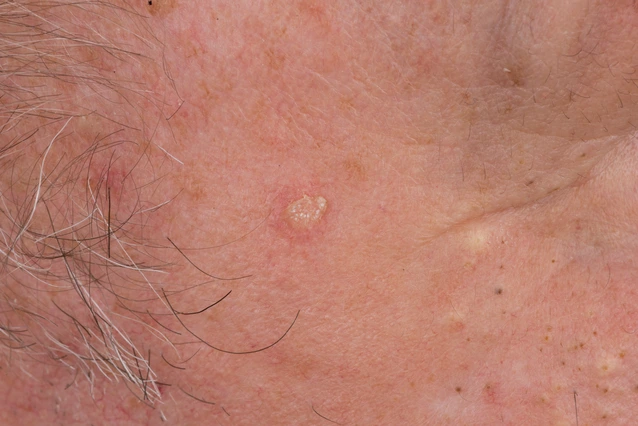
Basal cell carcinoma is an abnormal, uncontrolled growth that develops from the basal cells of the epidermis. This skin tumor can develop anywhere on the body, but most commonly occurs on areas of skin that are often exposed to the sun. It therefore often develops on the face, neck, scalp, shoulders, and nape of the neck.
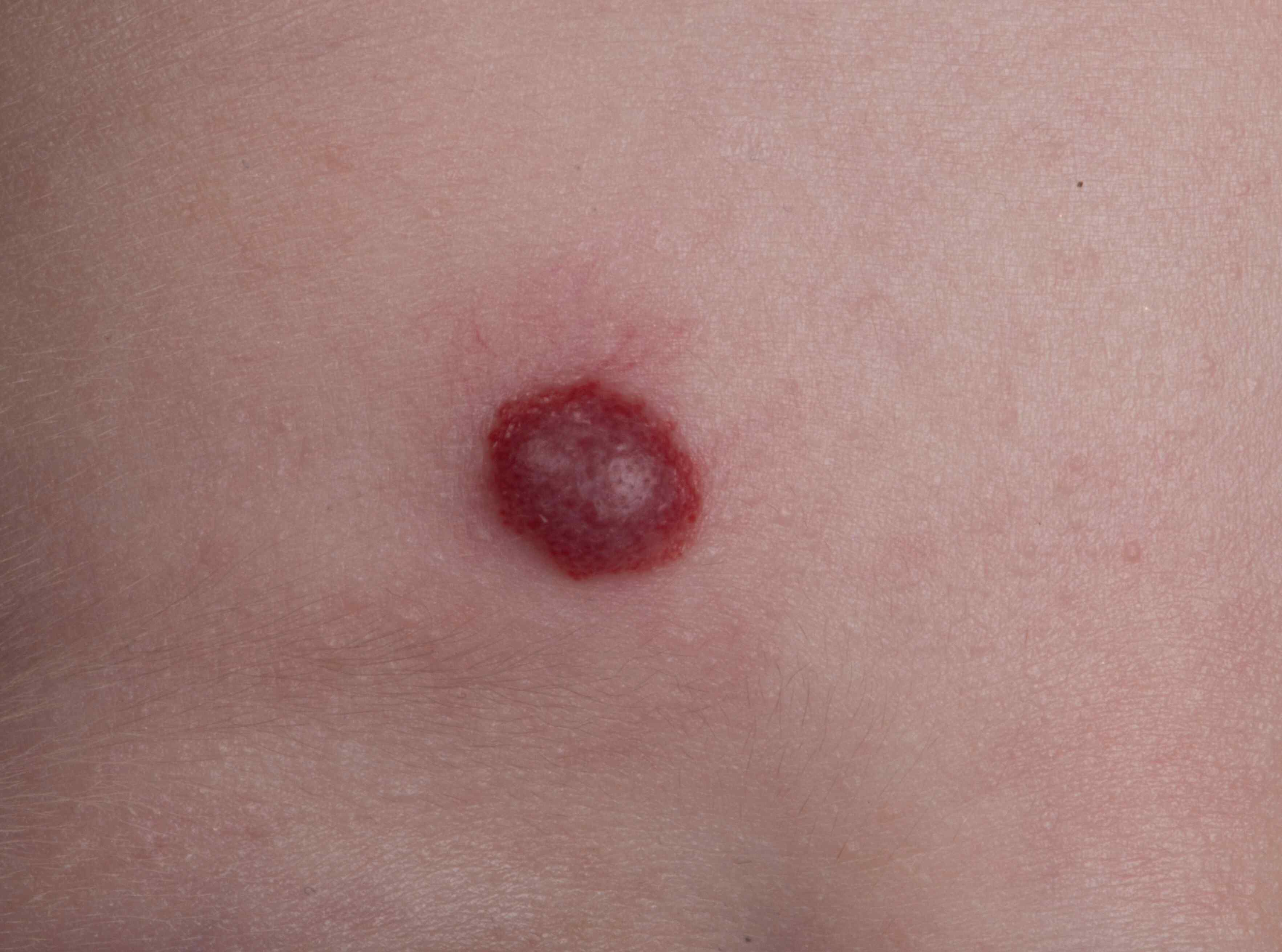
Basal cell carcinoma can take many different forms, making it difficult for laypeople to recognize. At first, this tumor looks like a small, porcelain-like pimple with tiny blood vessels visible on its surface. Over time, the surface of this skin elevation sinks in the middle and a depression forms, which is crisscrossed with vessels at the edge. There are scabs at the bottom of the depression, which can bleed from time to time.
Basal cell carcinoma grows slowly over many years, with even the smallest change being a cancerous tumor, as there is no preliminary stage. This skin tumor should therefore be removed as early as possible, as it will otherwise spread both in terms of area and depth into the tissue.
Squamous cell carcinoma, also known as spiny cell carcinoma, develops in the epidermis in the same way as basal cell carcinoma. Typical areas of skin that are frequently affected are the ears, nose, forehead, temples, scalp, neck, and hands.
The precursor to squamous cell carcinoma is actinic keratosis. This non-malignant precursor looks like redness that feels like fine sandpaper on the surface. If actinic keratosis is not treated and removed, a firm crust will form after some time, which will continue to grow and become a solid tumor. The malignant squamous cell carcinoma must then be removed. In rare cases, metastases can develop.
Follow-up care for at least five years is particularly important, as approximately half of those affected develop a second tumor within five years of the initial diagnosis.
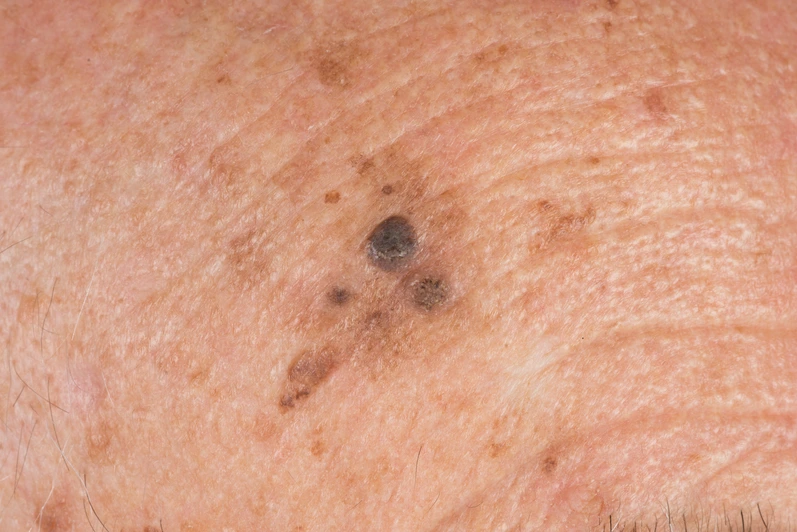
Malignant melanoma, also known as black skin cancer, is becoming increasingly common. This skin tumor develops from melanocytes, the skin cells that produce the pigment melanin, which gives the skin its color. Particularly dramatic is the fact that malignant melanoma is one of the most common tumors in people between the ages of 20 and 29.
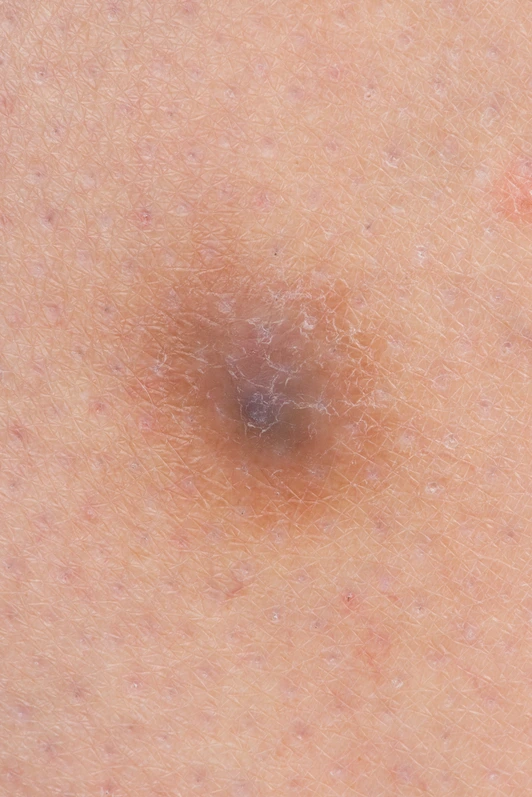
This malignant skin change can occur anywhere on the body, even in areas that are not normally exposed to the sun. Melanomas often resemble moles and can sometimes develop from them. The more moles a person has, the greater the risk of developing melanoma. Melanomas are usually triggered by intense and prolonged exposure to the sun, which leads to sunburn. The use of tanning beds also increases the risk of melanoma.

%20(1).webp)




%20(1).webp)